English
- English
- Español
- Português
- русский
- Français
- 日本語
- Deutsch
- tiếng Việt
- Italiano
- Nederlands
- ภาษาไทย
- Polski
- 한국어
- Svenska
- magyar
- Malay
- বাংলা ভাষার
- Dansk
- Suomi
- हिन्दी
- Pilipino
- Türkçe
- Gaeilge
- العربية
- Indonesia
- Norsk
- تمل
- český
- ελληνικά
- український
- Javanese
- فارسی
- தமிழ்
- తెలుగు
- नेपाली
- Burmese
- български
- ລາວ
- Latine
- Қазақша
- Euskal
- Azərbaycan
- Slovenský jazyk
- Македонски
- Lietuvos
- Eesti Keel
- Română
- Slovenski

How Can a Stainless Steel Slide Gate Valve Improve Industrial Flow Control and Operational Reliability
In demanding industrial environments, reliable flow control is essential for maintaining production efficiency, minimizing material loss, and protecting pipeline equipment. Jiangteng provides high-quality Stainless Steel Slide Gate Valve solutions designed to deliver excellent corrosion resistance, dependable sealing, and flexible operation across different industrial applications. With customizable dimensions, multiple actuation methods, and carefully selected materials, these valves offer a practical solution for controlling gases, dust-laden air, and various industrial materials.
A stainless steel slide gate valve is an industrial flow-control device that uses a vertically moving gate plate to open, close, or regulate the passage of pipeline media. Its straightforward structure, corrosion-resistant construction, and relatively low flow resistance make it suitable for chemical processing, environmental protection, food production, pharmaceutical manufacturing, metallurgy, and other industries.
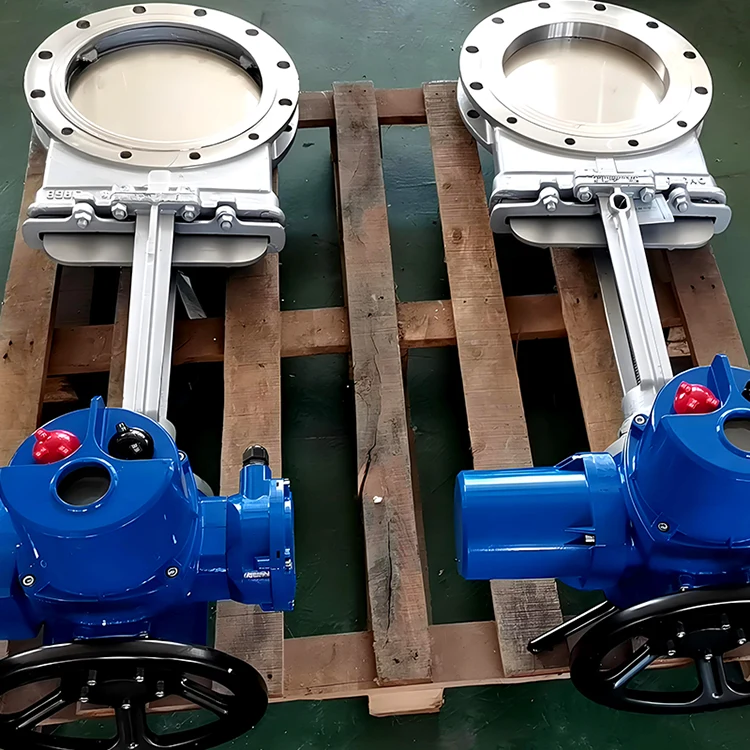
Table of Contents
- What Is a Stainless Steel Slide Gate Valve?
- How Does a Stainless Steel Slide Gate Valve Work?
- What Are the Main Advantages of Stainless Steel Slide Gate Valves?
- How Do Materials and Sealing Structures Affect Performance?
- What Technical Specifications Should Buyers Consider?
- How Do Different Actuation Methods Compare?
- Where Are Stainless Steel Slide Gate Valves Commonly Used?
- How Can You Select the Right Slide Gate Valve?
- How Can You Maintain Valve Performance?
- Frequently Asked Questions
- Conclusion: Choosing a Reliable Industrial Valve Solution
1. What Is a Stainless Steel Slide Gate Valve?
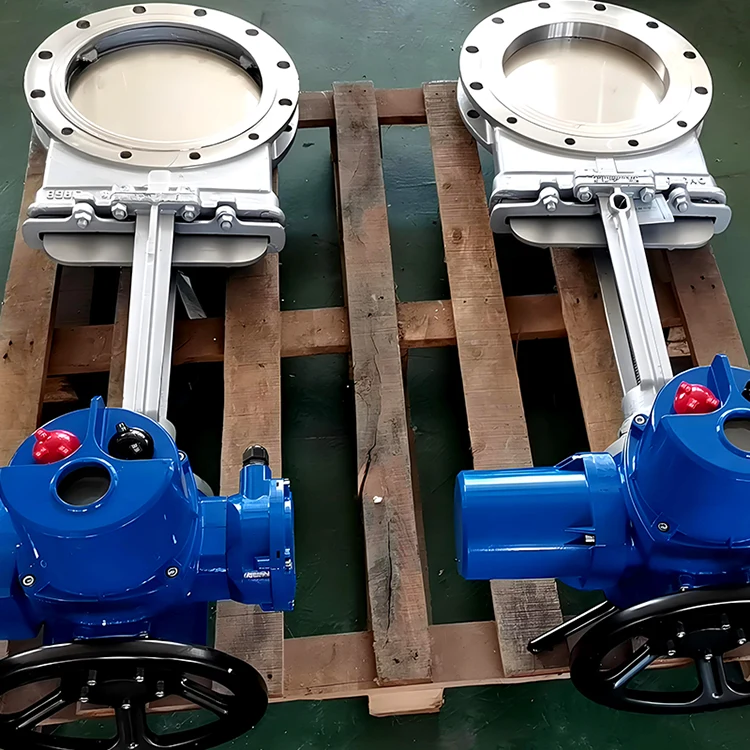
A stainless steel slide gate valve is a mechanical device designed to control the movement of materials through industrial pipelines, ducts, hoppers, and material-handling systems. It operates through a sliding gate plate that moves vertically within the valve body, allowing the passage to be opened, restricted, or closed according to operational requirements.
Unlike conventional globe valves or ball valves, which use different internal structures to control flow, slide gate valves rely on a relatively simple gate mechanism. This design is particularly useful in systems handling bulk materials, industrial dust, flue gas, and other media that require a large unobstructed passage.
The stainless steel construction provides additional protection against corrosion, oxidation, and moisture-related deterioration. Depending on the operating environment, manufacturers can select different stainless steel grades and sealing configurations to achieve the required performance.
Typical structural components include:
- Valve body: Provides structural support and connects the valve to the pipeline or duct system.
- Gate plate: Moves vertically to control the opening and closing of the flow passage.
- Sealing components: Help minimize leakage between the gate plate and valve body.
- Operating mechanism: Enables manual, electric, or pneumatic movement.
- Connection interface: Supports installation through flange or welded connections.
For industrial buyers, the most important consideration is selecting a valve structure that matches the physical and chemical characteristics of the medium rather than choosing solely based on nominal dimensions.
2. How Does a Stainless Steel Slide Gate Valve Work?
The working principle of a stainless steel slide gate valve is based on the controlled vertical movement of a gate plate. This mechanism provides a direct and relatively uncomplicated way to manage material flow in industrial systems.
The operating process generally involves three stages:
Opening the Valve
When the valve receives an opening command, the operating mechanism lifts the gate plate upward. As the gate moves away from the flow passage, the internal opening becomes unobstructed, allowing the medium to pass through with minimal additional flow resistance.
Adjusting the Opening
Depending on the valve design and application, the gate can be positioned at an intermediate point. This allows operators to adjust the effective opening area and influence the flow rate. However, continuous throttling should only be used when the valve is specifically designed and rated for such service.
Closing the Valve
When the valve closes, the gate plate moves downward until it reaches the sealing position. The gate and corresponding sealing surfaces work together to restrict the passage of the medium.
For automated industrial production lines, electric or pneumatic actuators can be integrated into the valve assembly. These configurations allow remote operation and improve coordination with centralized control systems.
The simple operating mechanism also makes inspection and routine maintenance more straightforward compared with some more complicated valve structures.
3. What Are the Main Advantages of Stainless Steel Slide Gate Valves?
Industrial equipment must maintain reliable performance despite exposure to challenging environmental conditions. A properly selected stainless steel slide gate valve offers several advantages that make it suitable for demanding operating environments.
3.1 Excellent Corrosion Resistance
Stainless steel materials such as 304 and 316L provide strong resistance to many corrosive environments. They are particularly valuable in applications involving moisture, chemical exposure, and industrial cleaning processes.
For environments containing more aggressive chemicals or chlorides, 316L stainless steel may offer advantages over 304 stainless steel. Nevertheless, material selection should always consider chemical concentration, operating temperature, and exposure duration.
3.2 Reliable Sealing Performance
Sealing integrity directly influences operational safety, environmental protection, and material efficiency. Precision-machined sealing surfaces and suitable sealing components help reduce leakage during normal valve operation.
Jiangteng offers different sealing configurations, including soft-seal and hard-seal structures, allowing customers to select an appropriate solution based on temperature, media characteristics, and sealing requirements.
3.3 Flexible Operating Configurations
Different production facilities have different operating requirements. Manual operation may be sufficient for occasional adjustments, while automated systems often require electric or pneumatic actuation.
Available configurations can be selected according to:
- Required opening and closing frequency.
- Pipeline diameter and installation position.
- Available power or compressed air supply.
- Remote monitoring and automation requirements.
- Operating environment and maintenance accessibility.
3.4 Convenient Maintenance
A relatively simple mechanical structure helps reduce maintenance complexity. Modular components and replaceable sealing elements make routine inspection and repair more manageable.
When properly installed and maintained, the valve can help reduce unexpected downtime and improve the overall reliability of industrial material-handling systems.
3.5 Customization for Different Industrial Systems
Standardized valve dimensions do not always match actual installation requirements. Customization provides greater flexibility in terms of opening dimensions, connection methods, operating mechanisms, and material selection.
Jiangteng supports customized solutions for different pipeline configurations and media characteristics, helping customers integrate suitable slide gate valves into existing equipment systems.
4. How Do Materials and Sealing Structures Affect Performance?
Material selection is one of the most important factors when purchasing an industrial slide gate valve. Different media and operating conditions can create different corrosion, temperature, and wear challenges.
Material Selection
Common material options for industrial slide gate valves include 304 stainless steel, 316 stainless steel, carbon steel, cast steel, and heat-resistant steel. The appropriate material depends on the intended application.
| Material | Main Characteristics | Typical Applications |
|---|---|---|
| 304 Stainless Steel | Good general corrosion resistance and fabrication properties | General industrial equipment and food-processing environments |
| 316 Stainless Steel | Improved resistance to chloride-containing and certain corrosive environments | Chemical processing and demanding industrial applications |
| 316L Stainless Steel | Low-carbon composition with good corrosion resistance and weldability | Chemical and pharmaceutical equipment |
| Carbon Steel | Good structural strength and economical material cost | General industrial material-handling systems |
| Heat-Resistant Steel | Designed for selected elevated-temperature environments | High-temperature industrial gas and thermal processing systems |
Soft Seal and Hard Seal Configurations
Sealing structure selection should be based on the actual operating conditions rather than on a single universal preference.
- Soft seal: Uses suitable flexible sealing materials to achieve effective sealing performance. It is appropriate for applications where the operating temperature and chemical compatibility fall within the seal material's rated limits.
- Hard seal: Uses rigid sealing surfaces, often with wear-resistant construction, for applications requiring greater resistance to certain high-temperature or abrasive operating conditions.
For systems involving abrasive particles, high temperatures, or corrosive substances, engineers should evaluate both the valve body material and the sealing material. A corrosion-resistant body alone cannot guarantee reliable service if the sealing components are incompatible with the process medium.
5. What Technical Specifications Should Buyers Consider?
Before purchasing a stainless steel slide gate valve, buyers should review its technical specifications carefully. Important parameters include opening dimensions, design pressure, operating temperature, connection type, sealing configuration, and actuator selection.
The following table summarizes the standard product range presented by Jiangteng.
| Technical Parameter | Standard Specification |
|---|---|
| Round Opening Specifications | φ100 mm–5000 mm |
| Square Opening Specifications | Customized according to client requirements |
| Connection Method | Flange / Weld |
| Operating Temperature | -30°C to 600°C |
| Design Pressure | ±5000 Pa; customized for high-pressure applications |
| Leakage Rate | ≤1% to zero leakage, depending on configuration |
| Applicable Media | Flue gas, dust-laden gas, cold air, hot air, and powdered materials |
| Primary Materials | Carbon steel, cast steel, 304 stainless steel, 316 stainless steel, and heat-resistant steel |
| Sealing Configuration | Soft seal / Hard seal |
| Drive Method | Manual / Electric / Pneumatic / Electro-hydraulic / Hydraulic |
| Installation Position | Horizontal duct / Vertical duct / Inclined duct |
Important engineering consideration: These specifications describe the manufacturer's product range and should not be interpreted as a guarantee that every combination of size, material, temperature, and pressure is available in one standard configuration. Buyers should confirm the applicable ratings for their selected model before ordering.
For customized projects, providing detailed operating information helps manufacturers recommend a more appropriate valve configuration.
6. How Do Different Actuation Methods Compare?
The actuation method determines how the gate plate moves and how the valve interacts with the wider industrial control system. Selecting the correct operating mechanism can improve productivity and reduce manual intervention.
| Actuation Type | Operating Characteristics | Recommended Applications |
|---|---|---|
| Manual | Simple mechanical operation without external power | Small systems and infrequent operation |
| Electric | Motor-driven operation with remote control capability | Large pipelines and automated production lines |
| Pneumatic | Uses compressed air for rapid mechanical movement | Frequent operation and suitable automated systems |
| Electro-hydraulic | Combines electrical control with hydraulic actuation | Applications requiring specialized operating force |
| Hydraulic | Uses hydraulic power to drive the gate mechanism | Selected heavy-duty industrial installations |
Manual slide gate valves are generally economical and straightforward to maintain. However, frequent operation or installation at inaccessible locations may make manual control less practical.
Electric actuators are suitable when remote operation and integration with industrial automation systems are important. Pneumatic actuators can provide rapid response where a reliable compressed air supply is available.
When selecting an actuator, buyers should also consider operating speed, torque or thrust requirements, control signals, environmental protection, and emergency operating procedures.
7. Where Are Stainless Steel Slide Gate Valves Commonly Used?
Because of their adaptable construction and available material options, stainless steel slide gate valves serve a wide range of industrial sectors.
7.1 Chemical Processing and Environmental Protection
Chemical production facilities often transport corrosive gases, chemical raw materials, and industrial waste streams. Stainless steel construction can provide improved resistance to selected corrosive media, helping protect pipeline systems and supporting stable production.
In environmental protection projects, slide gate valves can also be installed in dust collection systems, gas treatment equipment, and industrial exhaust ducts to control the movement of air and dust-laden gas.
7.2 Food and Pharmaceutical Manufacturing
Food and pharmaceutical facilities often require equipment with suitable material compatibility, cleanable surfaces, and reliable sealing. Stainless steel valve configurations can be selected for compatible process applications involving products such as fruit juices, dairy materials, and pharmaceutical fluids.
For hygienic processes, buyers should additionally verify the required sanitary design, surface finish, cleaning procedures, and applicable industry certifications. Not every industrial slide gate valve automatically meets sanitary processing standards.
7.3 Metallurgy and Power Generation
Metallurgical plants and power stations frequently handle high-temperature gases, dust, and other challenging industrial media. Depending on the selected material and sealing structure, slide gate valves can provide an effective method of controlling flow in these systems.
7.4 Bulk Material Handling
Powdered and granular materials are common in cement production, mineral processing, chemical manufacturing, and agricultural processing. Slide gate valves can be installed beneath hoppers, storage silos, and conveying equipment to manage material discharge.
When handling abrasive or cohesive materials, buyers should evaluate the gate clearance, wear protection, material accumulation risk, and maintenance accessibility.
8. How Can You Select the Right Slide Gate Valve?
Choosing the right stainless steel slide gate valve requires a clear understanding of the operating environment and the equipment's functional requirements. A technically suitable product can improve system efficiency, while an incorrect selection may lead to leakage, premature wear, or unnecessary maintenance expenses.
Consider the following selection checklist before requesting a quotation:
- Identify the medium: Determine whether the valve will handle liquid, gas, flue gas, dust, powder, or another industrial material.
- Confirm chemical compatibility: Check the medium's composition, concentration, and corrosive characteristics before selecting stainless steel grades.
- Determine operating temperature: Confirm both normal and maximum temperatures, including possible temperature fluctuations.
- Evaluate pressure conditions: Specify operating pressure, differential pressure, and any pressure fluctuations.
- Confirm opening dimensions: Provide the required round or square opening dimensions and nominal connection size.
- Select the connection type: Determine whether a flange or welded connection is more suitable for the installation.
- Choose the sealing structure: Compare soft-seal and hard-seal options based on leakage requirements and operating conditions.
- Determine actuation requirements: Decide whether manual, electric, pneumatic, or hydraulic operation is appropriate.
- Review installation limitations: Check available space, mounting direction, actuator clearance, and maintenance access.
For a more accurate recommendation, provide the manufacturer with the medium type, temperature, pressure, pipeline dimensions, and connection requirements. This information allows engineers to assess the application and propose a suitable configuration.
Explore Jiangteng's stainless steel slide gate valve solutions to learn more about available specifications and customization options.
9. How Can You Maintain Valve Performance?
Regular inspection and preventive maintenance are essential for maintaining the performance of industrial slide gate valves. Even high-quality stainless steel equipment requires proper care to ensure reliable long-term operation.
Recommended Maintenance Practices
- Inspect sealing surfaces regularly. Check for accumulated dust, material deposits, corrosion, and mechanical damage that could affect sealing performance.
- Check gate movement. Verify that the gate plate moves smoothly without abnormal friction, jamming, or excessive vibration.
- Examine actuator components. Inspect manual operating mechanisms, electric actuators, pneumatic cylinders, and relevant connections.
- Monitor leakage. Investigate abnormal leakage promptly and identify whether the problem originates from the sealing components, installation, or operating conditions.
- Replace worn components. Replace damaged seals and other service components with compatible parts recommended for the valve configuration.
- Keep the equipment clean. Remove accumulated dust and material deposits where appropriate, following safe maintenance procedures.
Before performing maintenance, isolate the valve from the process system, release stored pressure, and follow the facility's lockout and safety procedures. Personnel should never attempt to repair a valve while it is exposed to uncontrolled process conditions.
Preventive maintenance helps extend service life, reduce unexpected shutdowns, and maintain consistent industrial production performance.
10. Frequently Asked Questions About Stainless Steel Slide Gate Valves
Q1: What is the primary function of a stainless steel slide gate valve?
A: Its primary function is to control the passage of materials through pipelines, ducts, hoppers, and industrial conveying systems. The vertically moving gate plate opens or closes the flow passage and may provide intermediate opening adjustment when the valve design supports it.
Q2: What is the difference between 304 and 316 stainless steel slide gate valves?
A: Both materials offer corrosion resistance, but 316 stainless steel contains molybdenum, which generally improves resistance to chloride-containing environments and certain aggressive chemicals. Grade 304 is suitable for many general industrial applications, while 316 or 316L may be more appropriate for more demanding chemical environments. Actual suitability depends on the specific medium and operating conditions.
Q3: What operating temperature range can Jiangteng slide gate valves support?
A: Jiangteng lists a standard operating temperature range of -30°C to 600°C for its slide gate valve product range. The achievable temperature limit depends on the selected body material, sealing components, actuator configuration, and actual working conditions. Customers should confirm the rating of the specific model before purchase.
Q4: Can stainless steel slide gate valves be customized?
A: Yes. Jiangteng provides customization options covering opening dimensions, connection methods, materials, pressure requirements, sealing structures, and operating mechanisms. Customized solutions can be developed according to the customer's pipeline layout and process requirements.
Q5: Which is better: a manual, electric, or pneumatic slide gate valve?
A: There is no universal best option. Manual valves are economical for smaller systems and occasional operation. Electric valves are suitable for remote operation and automated production lines. Pneumatic valves are useful when rapid response and compressed-air-powered operation are required. The final choice should consider operating frequency, available utilities, control requirements, and environmental conditions.
Q6: Are stainless steel slide gate valves suitable for powder and dust handling?
A: Yes. Slide gate valves are widely used in industrial systems handling powdered materials, dust-laden gas, and bulk solids. Their relatively unobstructed flow passages make them useful for material discharge and flow isolation. However, the gate design, sealing arrangement, and wear resistance should be selected according to the material's particle size, abrasiveness, and tendency to accumulate.
Q7: What connection methods are available?
A: Jiangteng lists flange and welded connection options. The appropriate connection depends on the pipeline structure, installation requirements, maintenance strategy, and applicable engineering standards.
Q8: How can minor leakage in a slide gate valve be addressed?
A: Minor leakage may result from accumulated impurities on sealing surfaces, seal wear, or mechanical misalignment. Maintenance typically involves inspecting and cleaning the sealing surfaces, checking gate movement, and replacing damaged sealing components when necessary. The system should be safely isolated before any inspection or repair.
Q9: What information should I provide when requesting a quotation?
A: Buyers should provide the required opening dimensions, medium type, operating temperature, pressure conditions, connection method, preferred material, sealing requirements, and actuation method. Drawings or installation photographs can also help engineers evaluate customized requirements more accurately.
11. Conclusion: Choosing a Reliable Industrial Valve Solution
A stainless steel slide gate valve is an important component in industrial flow-control and material-handling systems. Its simple operating principle, corrosion-resistant material options, adaptable sealing structures, and multiple actuation methods make it suitable for a wide variety of demanding applications.
However, achieving reliable performance requires more than selecting a stainless steel valve based on appearance or nominal size. Buyers should carefully evaluate media compatibility, operating temperature, pressure conditions, sealing requirements, connection dimensions, and automation needs before making a purchasing decision.
As an industrial valve manufacturer, Jiangteng offers flexible stainless steel slide gate valve configurations and customized manufacturing support for different operating environments. Whether your project involves chemical processing, environmental protection, bulk material handling, or industrial gas control, selecting the right valve configuration can help improve equipment reliability and reduce long-term operating costs.
Looking for a dependable Stainless Steel Slide Gate Valve manufacturer for your next industrial project? Contact Jiangteng today to discuss your technical requirements. Our team can provide professional product selection advice, detailed specifications, customized solutions, and competitive factory quotations. Share your application details with us and contact us to find the right valve solution for your industrial flow-control system.
Related News
- How Can a High-Temperature Rotary Valve Improve Material Handling Efficiency in Extreme Industrial Environments
- How Can a Silo Slide Gate Valve Improve Material Flow Control, Sealing Performance, and Industrial Efficiency
- How Can a Standalone Baghouse Dust Collector Improve Industrial Air Quality and Production Efficiency
- How Can a Standalone Baghouse Dust Collector Improve Industrial Air Quality and Reduce Operating Costs
- How Can a Cartridge Dust Collector Improve Industrial Air Quality and Reduce Operating Costs
- What Makes Baghouse Dust Collectors Effective for Industrial Dust Control?
Leave me a message
News Recommendations