
China Industrial Cartridge Dust Collectors Manufacturer and Supplier
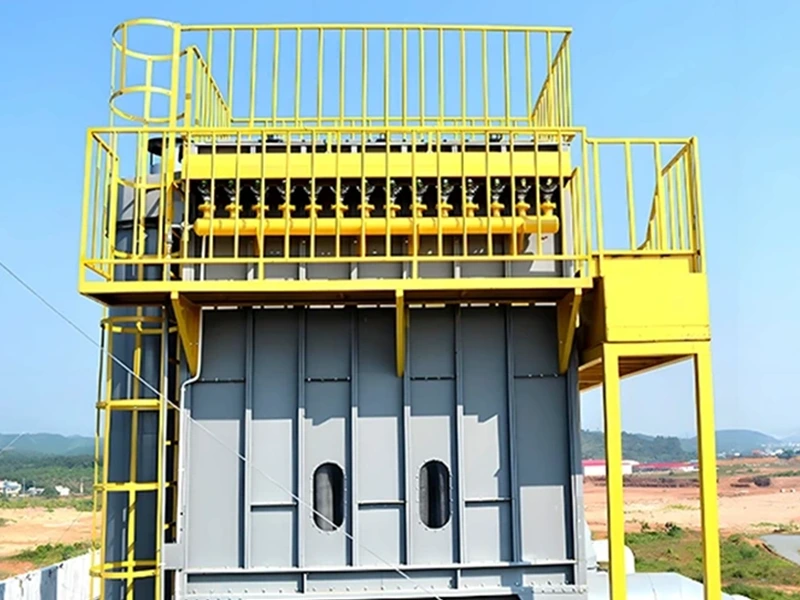
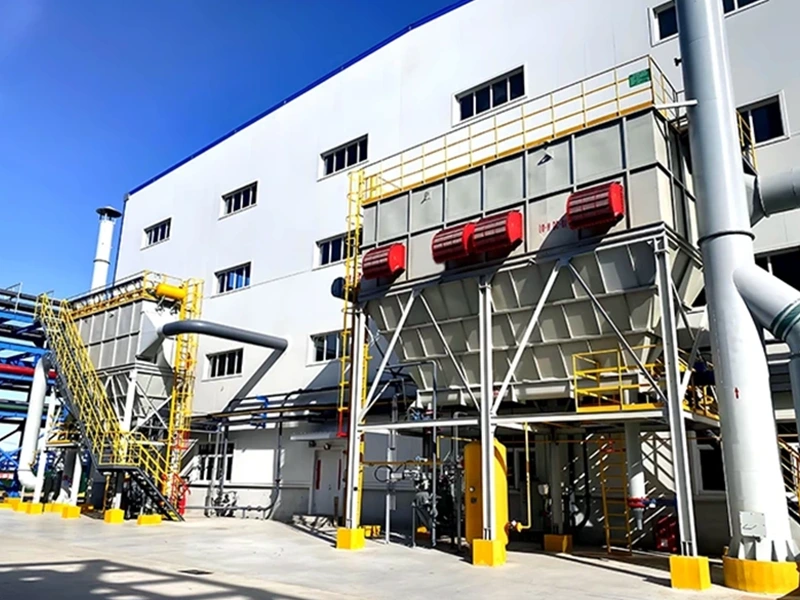
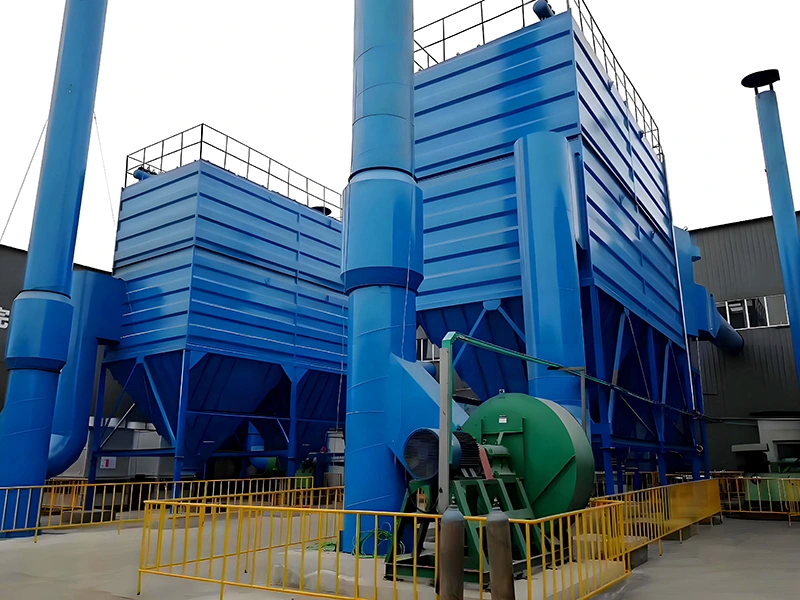
Jiangteng is a reliable manufacturer and supplier of dust collectors. In addition to baghouse dust collectors, we also offer cartridge dust collectors, which provide a larger filtration area within a compact footprint. We support customization based on specific operating conditions; please feel free to contact us.
What Is a Cartridge Dust Collector?
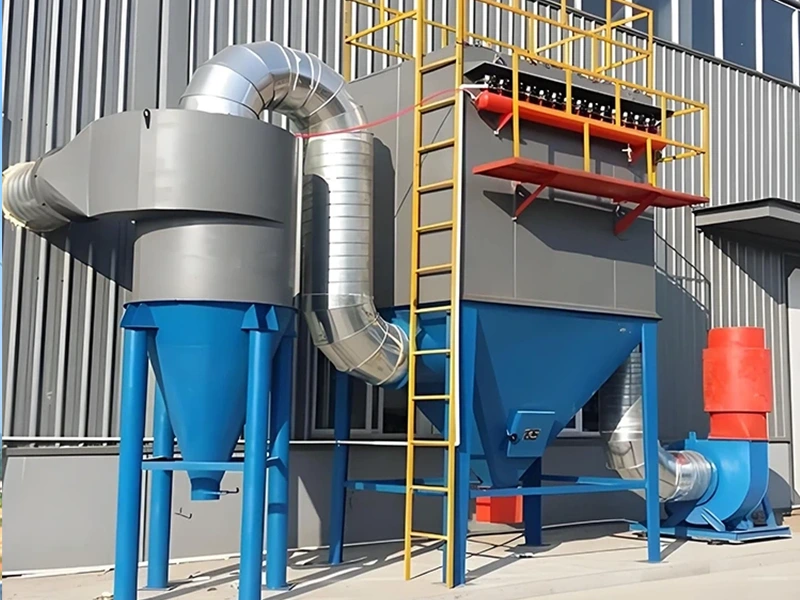
A cartridge dust collector uses pleated filter cartridges to provide a large filtration area within a relatively compact housing. Dust is retained on the cartridge surface while cleaned gas passes through the filter media. Pulsed compressed air removes accumulated dust so it can fall into the hopper or collection container. Cartridge collectors are often considered for fine, dry dust and installations where footprint matters. Suitability must still be checked against dust loading, moisture, stickiness, particle behavior, temperature, cleaning conditions and the required maintenance arrangement.
Key Advantages
● Cartridge dust collectors provide a large filtration area within a compact equipment footprint.
● With a well-designed maintenance access layout, pleated filter cartridges are easy to replace.
● Various cartridge materials and surface treatments can be evaluated to suit specific fine-dust applications.
● Pulse-jet cleaning, differential pressure monitoring, and control systems can be configured according to project requirements.
● Inlet location, hopper, dust collection container, and discharge interface can be adjusted based on the equipment layout.
Working Principle
● Dust-laden gas enters the cartridge dust collector and is distributed within the cartridge zone.
● Fine particles are captured on the surface of the pleated filter cartridges.
● Purified gas passes through the filter media into the clean air plenum and exits through the outlet.
● Compressed air is pulsed according to a preset program or differential pressure, causing the dust layer to dislodge.
● Collected dust falls into a hopper, silo, or detachable dust container for easy disposal or transfer.
Configuration and Technical Framework
|
Parameter |
How it is determined |
|
Airflow |
Defined from the process and capture points; the public model range requires technical confirmation. |
|
Cartridge size and quantity |
Selected from airflow, filter area, dust loading, housing dimensions and maintenance access. |
|
Filter media |
Chosen from particle size, moisture, electrostatic behavior, chemical compatibility and temperature. |
|
Cleaning system |
Pulse valves, air header, cleaning sequence and pressure are matched to the cartridge and duty. |
|
Installation layout |
Vertical or project-specific cartridge arrangement, inlet position, access door and removal clearance. |
|
Dust collection |
Hopper, drawer, bin, rotary valve or another interface according to dust volume and handling method. |
|
Controls |
Differential-pressure indication, pulse controller, PLC, VFD and alarms when required. |
|
Emission target |
Confirmed from regulations, particle characteristics, media selection and an agreed design basis. |
Suitable Applications
● Welding and metalworking fumes or fine, dry particulates (specific operating conditions require assessment).
● Dust from grinding, polishing, cutting, and surface processing.
● Powder conveying, mixing, weighing, and transfer points.
● Subject to material compatibility verification, cartridge dust collectors can also be used in chemical and specialty powder applications.
● Compact local or central dust collection systems designed with optimized airflow.
When a Cartridge Collector May Not Be the First Choice
● Sticky, oily, or high-moisture dust may clog the pleated surfaces.
● High dust loading occurs without adequate pre-separation or a suitable inlet design.
● Gas temperatures exceed the permissible limits for the selected filter cartridges, seals, and housing components.
● Fibrous or elongated materials may become entangled or bridge across the pleats and dust-collecting surfaces.
● Combustible dusts should not be handled without first conducting a hazard assessment and implementing a compliant protection strategy.
Baghouse vs. Cartridge Collector
|
Consideration |
Baghouse |
Cartridge |
|
Filter format |
Fabric bags with project-specific length, quantity and media. |
Pleated cartridges with high filter area in compact space. |
|
Typical direction |
Broad industrial process-dust duties and continuous collection. |
Fine dry dust and installations where footprint is important. |
|
Dust behavior |
Media and cleaning design can be adapted across many duties. |
Pleats require careful review for sticky, fibrous or heavy-loading dust. |
|
Final choice |
Based on complete process and maintenance requirements. |
Based on complete process and maintenance requirements. |
Manufacturing, Inspection and Support
Jiangteng can configure the housing, cartridge arrangement, interfaces, hopper, cleaning system and controls around the confirmed requirements. Available project support may include drawings, material and dimensional checks, welding inspection, airtightness checks, no-load testing, operating documentation, remote installation guidance and spare-parts communication.
FAQ
What dust is suitable for a cartridge dust collector?
Cartridge collectors are commonly evaluated for fine, dry particulate. Final suitability depends on loading, moisture, stickiness, temperature, particle behavior and media compatibility.
How do I determine the required airflow?
Airflow is calculated from the number and type of collection points, capture velocity, enclosure design, duct resistance and process conditions.
Can cartridge size and quantity be customized?
Yes. Cartridge dimensions, quantity and arrangement are selected from airflow, filter area, dust loading, housing size and service access.
Can the collector include automatic pulse cleaning?
Yes. The pulse valves, air header, controller and cleaning logic can be configured for the selected cartridges and operating conditions.
Can it handle welding fume?
It may be configured for suitable welding-fume applications after reviewing the process, particle characteristics, sparks, airflow, filter media and safety requirements.
What maintenance space should be reserved?
Space is required for cartridge removal, access doors, pulse components and dust-container handling. Final clearances are shown on the approved drawing.
Request a Cartridge Collector Configuration
Provide the dust source, collection points, particle characteristics, airflow, temperature, moisture, installation space and operating schedule.
Jiangteng will review whether a cartridge collector is suitable and prepare a project-specific configuration.
- View as
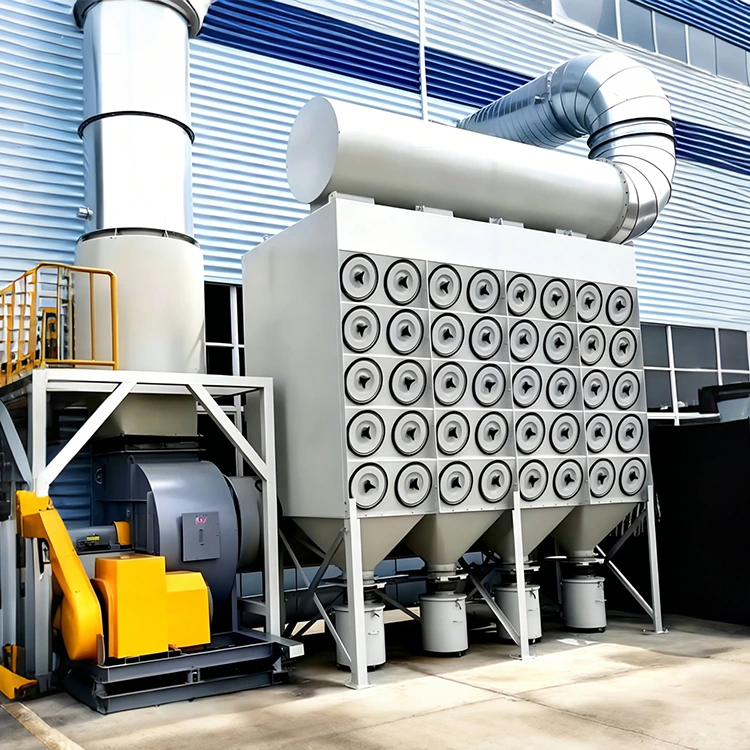
Cartridge Dust Collector
By choosing Jiangteng from China, you are selecting a reliable manufacturer of cartridge dust collectors. We provide dust control solutions for a wide range of industries, seamlessly integrating advanced technology with real-world operating conditions. Our equipment supports customization, operates with exceptional stability, is energy-efficient, and is easy to maintain.
As a reliable Cartridge Dust Collectors manufacturer and supplier in China, we have our factory. If you want to buy quality and durable products, please contact us.