
Professional Drag Chain Conveyors Manufacturer in China
Drag chain conveyors move bulk material through an enclosed casing using scrapers attached to one or more chains. This type of equipment can provide horizontal, inclined or vertical conveying in a compact sealed route. Contact Jiangteng to get a complete solution, we are a professional factory that can offer customization services and technical support.
Series and Route Comparison
|
Series |
Route |
Typical direction |
Important limitation |
|
FU |
Horizontal / slight incline |
Dense enclosed transfer of suitable powder and granules. |
Wear, chain load, fill level and power increase with difficult material. |
|
MS buried scraper |
Usually horizontal, project-specific slight incline |
Bulk material moves as a continuous internal layer. |
Material must form a stable moving layer; large or sticky lumps need review. |
|
MC inclined |
Approx. 15°–30° as a design direction, subject to verification |
Inclined enclosed transfer where route constraints justify it. |
Capacity generally falls as angle increases; do not copy horizontal capacity. |
|
MZ vertical |
Vertical |
Vertical lifting of suitable powder or small granules. |
Not preferred for highly abrasive, easily caking or unsuitable large-lump material. |
Chain and Wear Options
|
Material / treatment |
Application direction |
Review point |
|
40Cr quenched and tempered / surface hardened |
General heavy-duty chain requiring strength, toughness and improved wear resistance. |
Hardness, impact, pin/bush design and actual wear zone. |
|
20CrMnTi carburized |
High-abrasion duty requiring a hard surface and tough core. |
Impact frequency, carburized depth, cost and brittleness risk. |
|
304 / 316L stainless steel |
Corrosion-sensitive, humid, chemical or contamination-controlled duty. |
Corrosion chemistry, wear, chloride exposure and impact. |
|
Wear liners |
Loading, turning or high-wear casing zones. |
Replaceability, liner material, fasteners and clearance. |
Seven Inputs Needed for Selection
● Material name and bulk density.
● Dry or wet condition, caking, temperature, and abrasiveness.
● Required hourly capacity.
● Conveying length, center-to-center distance, and inclination.
● Dust-tight sealing and hazardous area requirements.
● Number and locations of inlets and outlets.
● Requirement for wear liners or replaceable wear parts.
FAQ
What material is suitable for a drag chain conveyor?
Many powders and granules can be considered, but bulk density, abrasiveness, stickiness, lump size, temperature and ability to form a stable material layer must be reviewed.
How does inclination affect capacity?
Capacity usually decreases with inclination. The chain load, material fallback, fill level and power must be recalculated for the selected angle.
When are wear liners required?
They are commonly considered at loading zones and for abrasive materials such as mineral, slag or coarse limestone duties. The final location and material follow wear analysis.
Can it have multiple discharge points?
Yes. Gates, sequence, remaining material flow and chain loading must be designed for the required discharge logic.
Request a Drag Chain Conveyor Selection
Send the material, capacity, conveying route, length, inclination, temperature, abrasiveness, inlet/outlet layout and sealing requirements. Jiangteng will review the series, chain, scraper and wear configuration.
- View as
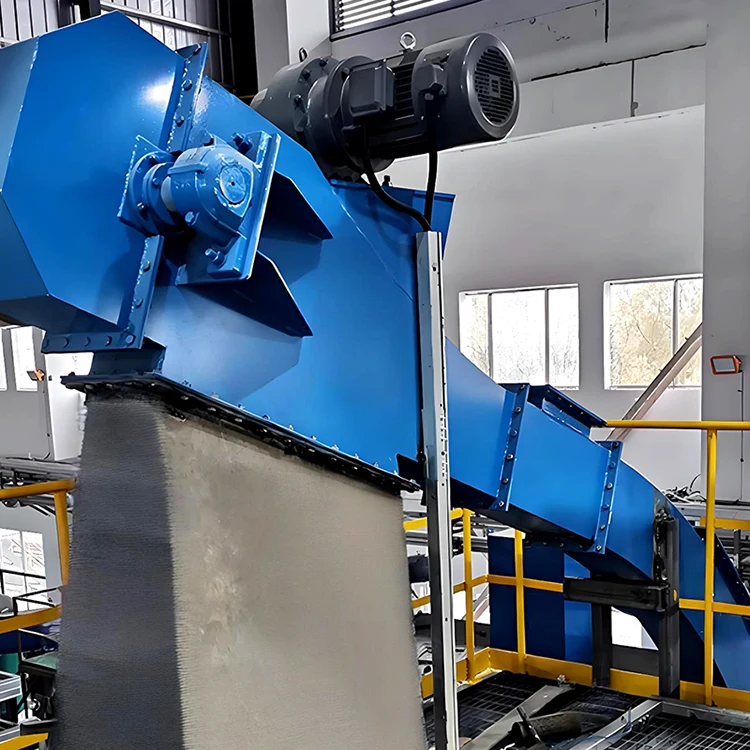
Inclined Drag Chain Conveyor
You can order custom Inclined Drag Chain Conveyors from Jiangteng. As a direct manufacturer, we offer equipment capable of stable conveying at steep angles ranging from 0° to 45°. Our systems ensure that powdery, granular, and small-lump materials remain stable and do not slide back during uphill transport, making them suitable for a wide range of industries.
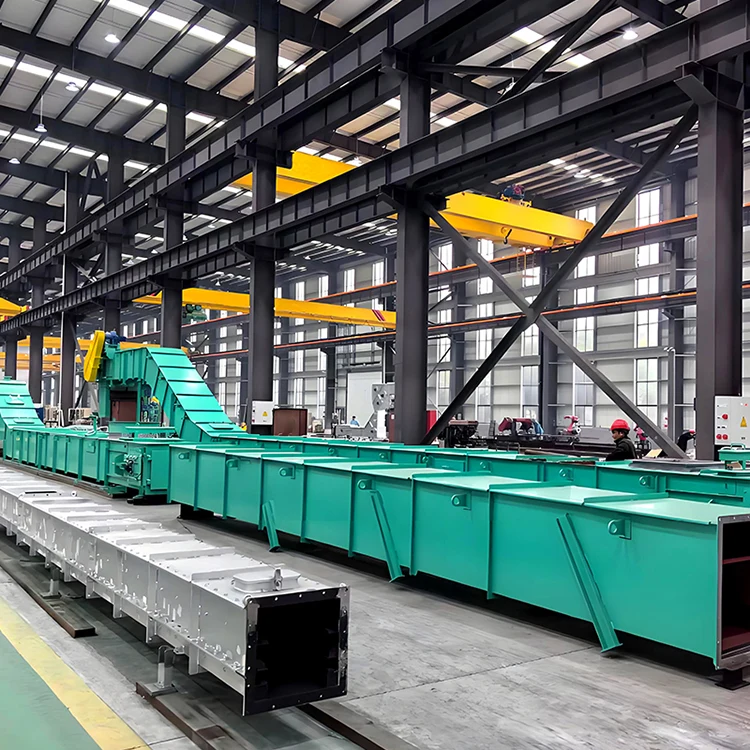
Chain Conveyor
Chain Conveyors represent Jiangteng’s solution for the continuous conveyance of bulk materials in modern industrial production environments. As a professional manufacturer and supplier, we possess robust R&D and design capabilities; our equipment is capable of handling a wide variety of materials, operates with stability and high efficiency, and is fully customizable.
As a reliable Drag Chain Conveyors manufacturer and supplier in China, we have our factory. If you want to buy quality and durable products, please contact us.