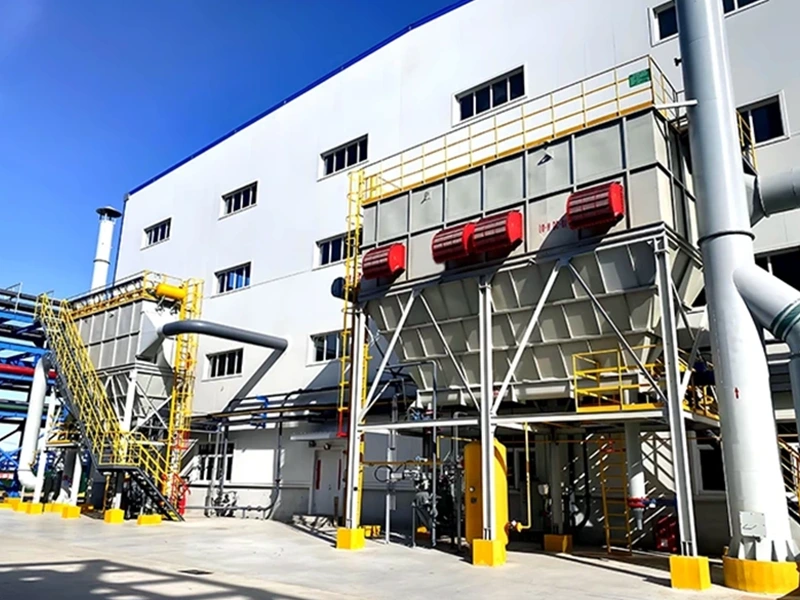
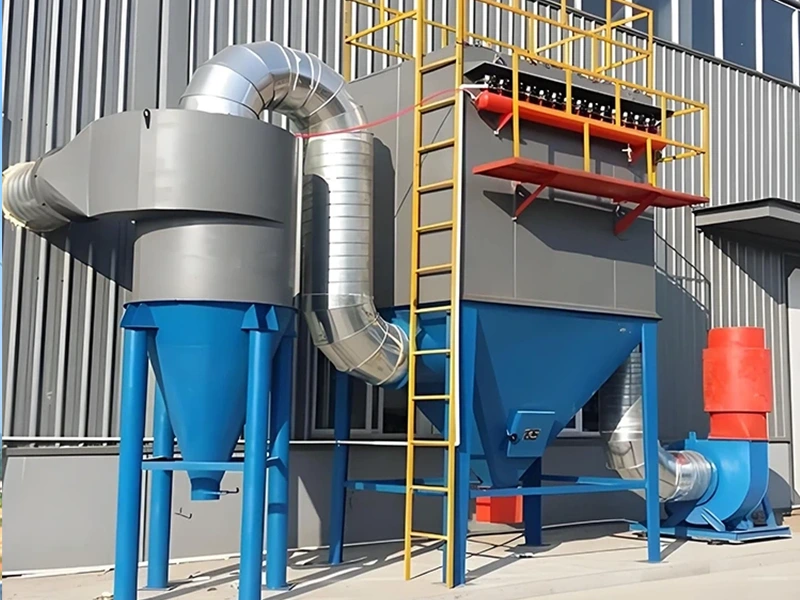
I. Causes and Solutions for Dust Collector Malfunction and Excessive Emissions:
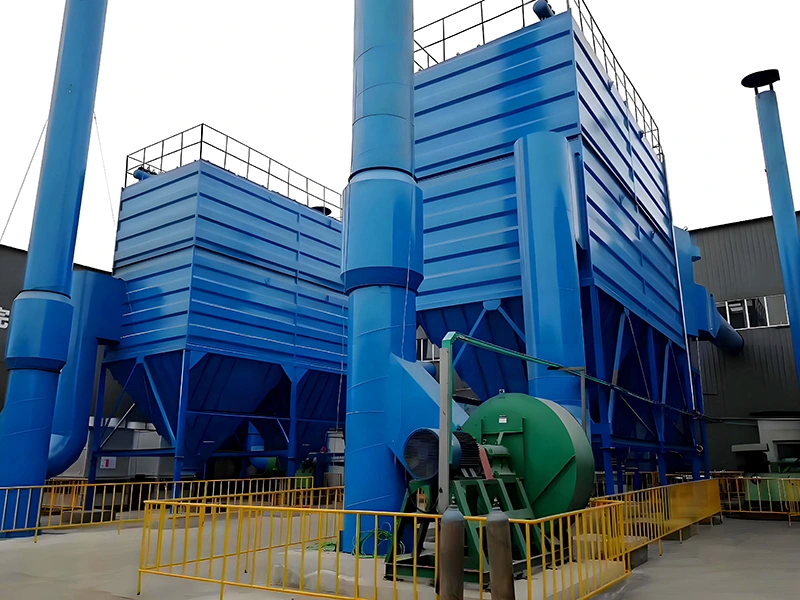
1) Malfunction or excessive dust emissions caused by technical or installation problems with the equipment itself: After installation, testing, adjustment, and continuous operation, and before formal production use, a proper operation management system and regular maintenance and repair system must be established to ensure the dust collector operates normally and achieves good dust removal results. Conversely, inadequate systems or improper operation and management may lead to abnormal operation of the dust collector, failing to achieve the goals of smoke and dust removal, indoor hygiene, and atmospheric environmental protection.
2) Excessive dust emissions caused by operator violations: In addition to establishing a sound environmental management organization, equipping it with sufficient technical and maintenance personnel, and conducting organized environmental knowledge education and training for management and boiler operators, boiler users also need to understand and master the basic knowledge of the structure, working principles, operation techniques, and maintenance of environmental protection facilities. Besides improving the management level of cadres and the quality of workers, separate operation management systems and maintenance and repair systems should be formulated for each environmental protection facility.
II. Start-up and Operation of Dust Removal Facilities:
Due to the different dust removal mechanisms and structural forms of various dust removal facilities, their operation and management systems also differ.
1. Start-up of Dust Removal Facilities
(1) Preparatory Work Before Start-up.
1) After the system airflow balance adjustment, the positions of the regulating valves of the ductwork and exhaust pipes of the dust removal facilities should be fixed and marked accordingly. Under normal circumstances, the positions of the valves should not be arbitrarily changed to avoid disrupting the balance of the entire system.
2) Before starting the dust removal system, the wiring of the motors of the induced draft fan, dust removal device, vibrating structure, and ash unloading system should be checked separately to ensure they are normal, well-insulated, and rotate flexibly.
3) Check whether the lubrication of each rotating part and bearing meets the requirements.
4) Check whether the operation of various measuring instruments and control devices is flexible and whether the readings are accurate.
(2) Start-up of Dust Removal Facilities. To prevent motor current overload when the induced draft fan of the dust removal system starts, the fan inlet valve should be closed or reduced to allow the fan to start under no-load or reduced-load conditions. Then, the valve should be gradually opened to allow the fan to operate under rated load.
To prevent dust from entering the room or accumulating in the ducts, the following principles should generally be followed when starting and stopping the dust removal system and boiler: Start-up: The dust removal system should be started before the boiler is started;
Shutdown: The dust removal system should not be shut down until several minutes after the boiler has been shut down.
2. Operation and Management of Dust Removal Facilities
Many factors affect the normal operation and dust removal performance of the dust removal system, such as different coal types, coal quantity, air volume, different coal types used for combustion and duration, low dust removal efficiency, length of dust collector operation, and operational management level. These factors can all cause changes in flue gas parameters, thus affecting the dust removal system. In addition, after a long period of operation, dust removal systems may experience various issues affecting their normal operation. For example, the walls of duct dust collectors may become perforated due to abrasion from dust particles or corrosion from acidic gases; baghouse dust collectors may experience short circuits in the dust-laden flue gas due to improper connection between the filter plates and bags or damage to the bags; dust blockage may occur due to malfunction of the ash discharger or a fault in the dust conveying system; and wet scrubbers may fail to remove dust due to malfunction of the water level control device or nozzle blockage. Therefore, in addition to strengthening management, the following aspects should be observed for normally operating dust removal facilities:
(1) Carefully observe the equipment's operation, diligently maintain equipment operation logs, and strictly adhere to the shift handover system.
The equipment operation log should mainly include:
1) Load and production capacity of the production equipment;
2) Types, components, proportions, and actual consumption of raw materials used in the process flow;
3) Characteristics, coal type, ash content, and consumption of the fuel used;
4) Current and voltage values of various electric equipment;
5) Temperature, flow rate, and pressure values of flue gas in the inlet and outlet pipes of the dust collector;
6) Working pressure and consumption of compressed air;
7) Water spray pressure, temperature, pH value, and consumption.
In addition to maintaining regular operation logs, if conditions permit, periodic sampling and testing of flue gas and dust characteristics should be conducted to understand the changes in flue gas composition, flow rate, moisture content, flue gas and dust concentration, density, and dust composition. For dust collectors, it is also necessary to understand the resistivity of the dust and the changes in primary and secondary current and voltage to adjust the operating conditions of the dust collection system in a timely manner, so that the operating conditions of the dust collector are adapted to the changed flue gas characteristics.
(2) Adhere to the inspection system and handle any abnormal situations that may occur at any time. Some large and medium-sized dust removal systems handle tens of thousands to hundreds of thousands, or even millions, of cubic meters of flue gas per hour. These dust removal facilities and systems are correspondingly massive. While some projects lack automatic monitoring devices to provide a general overview of the system, these devices alone cannot provide a thorough understanding of the operation of all equipment within the entire system. Therefore, it is crucial to move out of the centralized control room and maintain a regular inspection system. The number of inspections per shift should be determined based on the size of the system and the complexity of the equipment.
During inspections, any abnormalities discovered should be addressed promptly to eliminate potential hazards and prevent accidents from occurring. Examples of abnormalities include loose equipment bolts, air leaks at access doors, manholes, or pipe connections, misaligned regulating valves, and malfunctioning pulse valves.
We use cookies to offer you a better browsing experience, analyze site traffic and personalize content. By using this site, you agree to our use of cookies. Privacy Policy